

By Jovit D. Caballero

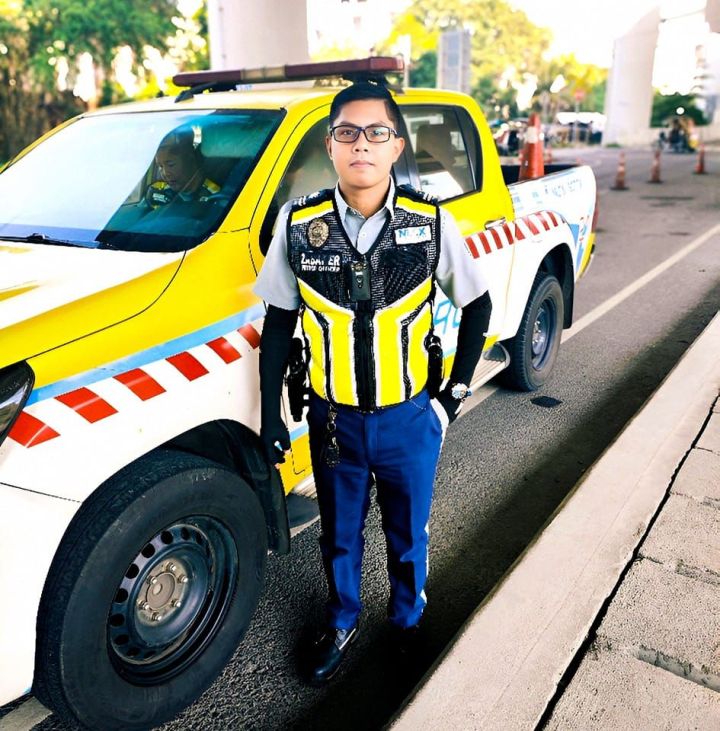
Emerson always thought he knew what being a good father looked like—until life showed him how quickly that image can change. Now, with a son of his own and no clear map to follow, Emerson stands at a crossroads between repeating the past or rewriting it. This is a story about learning, unlearning, and the fight to become the man your child needs you to be.
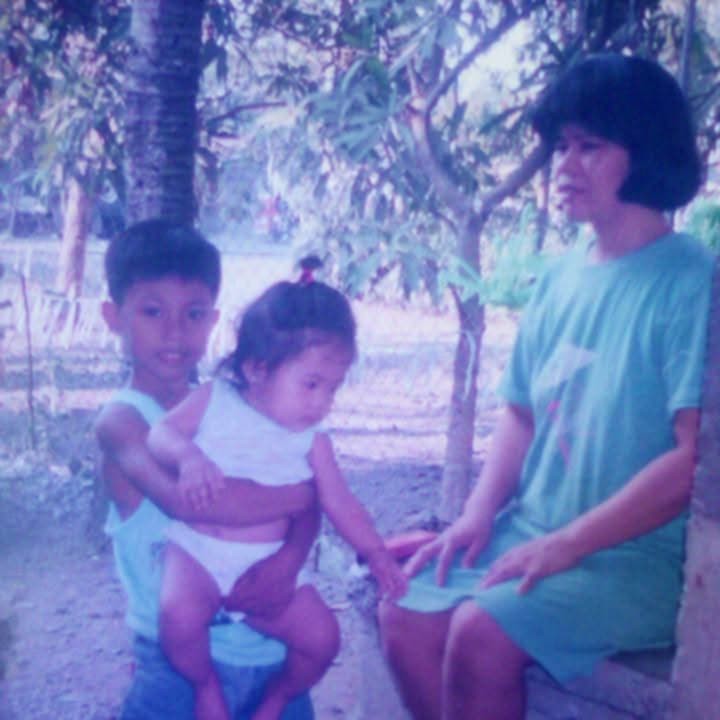
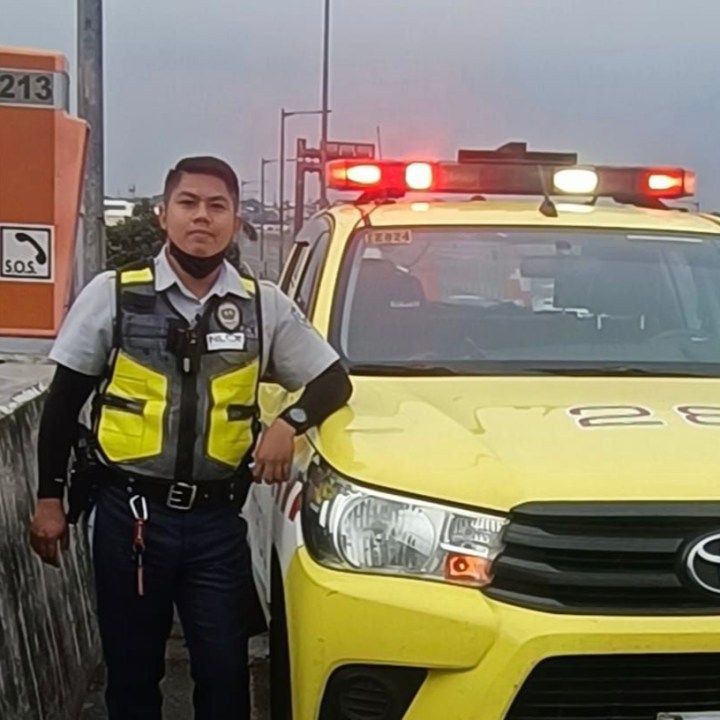
Emerson Zabat, 34, works as a Patrol Crew under the Traffic Operations Division and lives in Sto. Rosario, Paombong, Bulacan. He was born in a peaceful barangay in Gapan, Nueva Ecija, to a mother who worked as a sewer and a father who drove a tricycle. Life was simple, even joyful at times—but as Emerson grew older, so did the family’s financial struggles. To make ends meet, his mother took a sewing job in Manila, while his father accepted work overseas as a pool maintenance crew in Saudi Arabia. It was a decision none of them truly wanted, but one they felt they had to make in the hope of a better future—leaving young Emerson in the care of his grandmother, trying to understand why love sometimes has to leave.
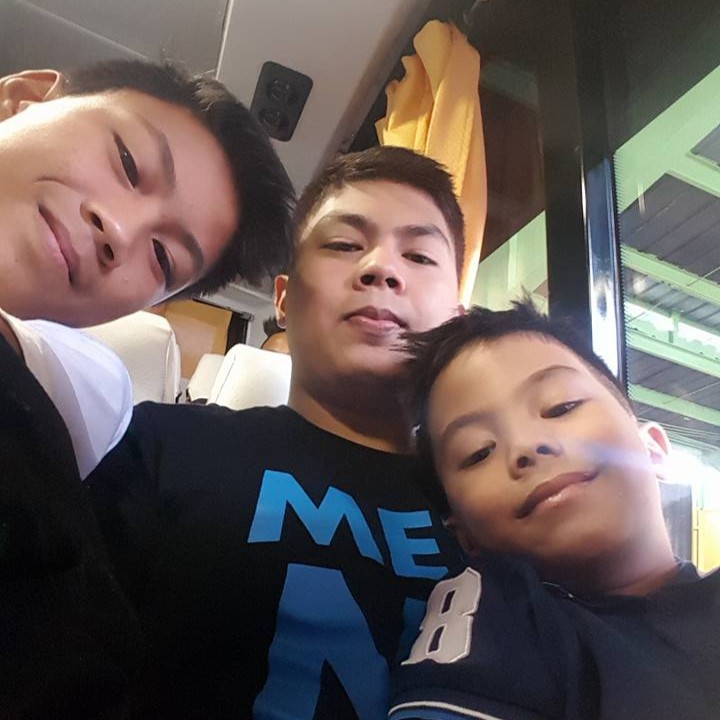
Growing up under the care of a strict grandmother, Emerson became quiet and withdrawn. He spent most of his days playing alone inside their home, only occasionally joining other kids on the street. His mother would come home once a week—sometimes not at all—and those brief visits became the only moments they shared. His father, on the other hand, returned only every two years. Instead of bringing them closer, this long-distance setup created a quiet distance within the family, leaving Emerson to navigate childhood with love that felt out of reach.

When his mother had saved enough, she brought Grade 1 Emerson to live with her in a small apartment along A. Bonifacio, Caloocan City. He was enrolled at E. Rodriguez Elementary School, hopeful that their lives were finally turning around—especially now that both his parents had found better-paying jobs. Though he was only an average student academically, Emerson began to thrive in other ways. He joined the school band as a drummer and often competed in dance contests, slowly breaking free from his shyness and finding his rhythm in front of a crowd. Everything seemed to be falling into place—what he didn’t know was that this would also be the chapter where something precious would suddenly slip away.

In 4th grade, Emerson looked forward to his father’s scheduled return home. During that one-month visit, a new blessing came into their lives—his mother became pregnant with what would be his younger brother. But the joy was short-lived. As soon as his father left again for work, all communication stopped. No calls, no messages, not even a word from his closest colleagues. It was as if he vanished into thin air—along with the financial support they had been counting on. Turns out, his father was living with another girl in Saudi Arabia. To make matters worse, his mother’s pregnancy turned out to be delicate, forcing her to temporarily stop working. With no income and only her small savings to rely on, they were left to face the uncertainty with nothing but hope—and each other.

During her pregnancy, Emerson’s mother found comfort in cross-stitching. With no money to pay rent, they began offering her handmade pieces as payment to their landlord—art in exchange for shelter. In an unexpected twist, a new man entered their lives, bringing what seemed like a solution to their growing problems—or so they thought. When his mother agreed to a live-in setup with Emerson’s soon-to-be stepfather, they relocated to Paombong, Bulacan, hoping for a fresh start. But life had other plans. Due to the demands of her job, his mother was once again forced to rent a small apartment in Manila, leaving young Emerson in the care of a man he barely knew, while his newborn brother was sent to live with relatives in Gapan, Nueva Ecija. The family, once again, found themselves separated—scattered by survival.

Living with his stepfather and his step-grandparents, Emerson was forced to grow up quickly. During his final year at Sto. Rosario Elementary School, he balanced his studies with physically demanding work—helping in the fields as a farmer and hauling fish as part of his daily routine after school and on weekends. It pained his mother deeply, especially knowing that she was still the one supporting his education financially. But to avoid higher rent costs, she had settled for a cramped, low-paying setup in Manila. Seeing her son endure such conditions pushed her to make a difficult choice once again. Right after his graduation, she brought Emerson back to live with her in a tiny, cage-like apartment in the city—cramped, suffocating, but at least, they were together again, and Emerson no longer had to carry the weight of adult responsibilities on his young shoulders.

Emerson and his mother managed to get through his high school years at Panghulo National High School in Malabon. But by his third year, the weight of their reality began to sink in—he came to fully realize that they were a broken family. As a newcomer in a densely packed squatter community, he often found himself the target of bullying. Feeling out of place and alone, he drifted toward classmates who offered him belonging, even if it meant skipping classes, hanging out aimlessly in malls, and spending school hours in computer shops. When his mother discovered what was happening, Emerson didn’t wait to be scolded—he offered to stop schooling altogether. With a heavy heart, she agreed. He returned to Gapan, Nueva Ecija to live a quiet, simple life—working as a farmer and occasionally driving a tricycle, far from the chaos of the city and the noise of his past mistakes.
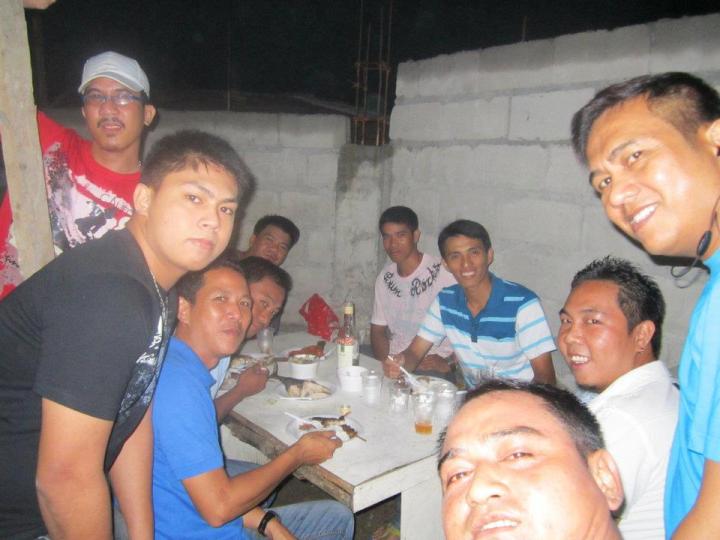
After spending a few years living a quiet life in the province, Emerson fell ill with a severe urinary tract infection and had to return to Manila for treatment. At the same time, he was reeling from a recent heartbreak, having just ended a relationship with his ex-girlfriend. Emotionally and physically drained, he decided to stay in Manila and live with his mother once again. Then, out of nowhere, something unexpected happened—his father reached out after years of complete silence. But it wasn’t to reconnect or rebuild their broken family. It turned out he had received a subpoena for a bigamy case filed by Emerson’s mother—not because of his woman in Saudi Arabia, but because he had a legal wife long before marrying her. As part of the settlement, Emerson’s father agreed to resume financial support for both him and his younger brother—a gesture that came not from love, but from obligation.
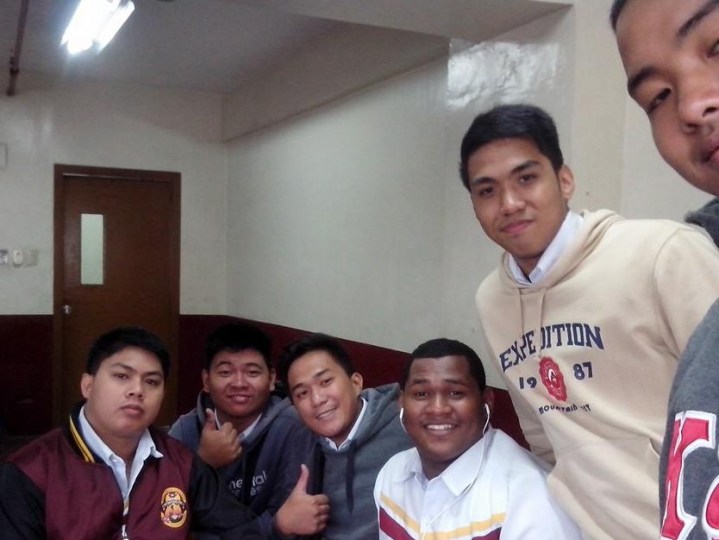
Once again, life became more comfortable for Emerson and his family. But with newfound ease came old habits—he found himself drawn back into computer games, spending most of his time in internet cafés. It was in one of those shops where he met Claire, the girl who would later become the mother of his child. After just two weeks, they entered a relationship, and within a month, Claire was pregnant. The news was overwhelming—and it triggered another fallout. Upon finding out, Emerson’s father abruptly cut off all financial support once more. Faced with the responsibility of becoming a father himself, Emerson took a job as an all-around helper in a stainless steel manufacturing company. But the long hours and heavy labor made him realize that this wasn’t the life he wanted. Determined to change his path, he pleaded with his mother for one more chance—asking her to support him financially so he could return to school and finally finish high school.
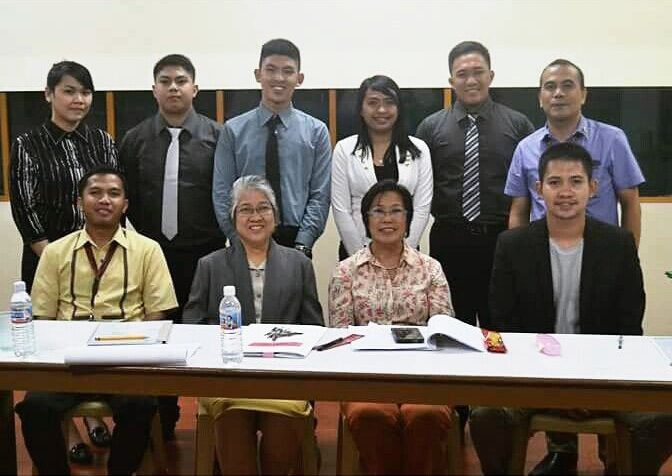
Fueled by a new sense of purpose brought by the birth of their son, Lance, Emerson pushed himself with unwavering dedication—and finally finished high school. His father, proud of this achievement, offered to support him again on one condition: that he pursue an engineering degree. But Emerson had a different dream. He wanted to take up Criminology. Determined not to let the opportunity slip, he chose to hide the truth and enrolled in the Philippine College of Criminology in Sta. Cruz, Manila, pretending to follow his father’s wishes. During this time, he and Claire were living with his mother in a much better apartment—life seemed to be slowly coming together. But as the months passed, and with only a fragile foundation of love between them, their relationship began to fade. In 2017, they made the difficult decision to part ways, with Claire taking Lance under her care.
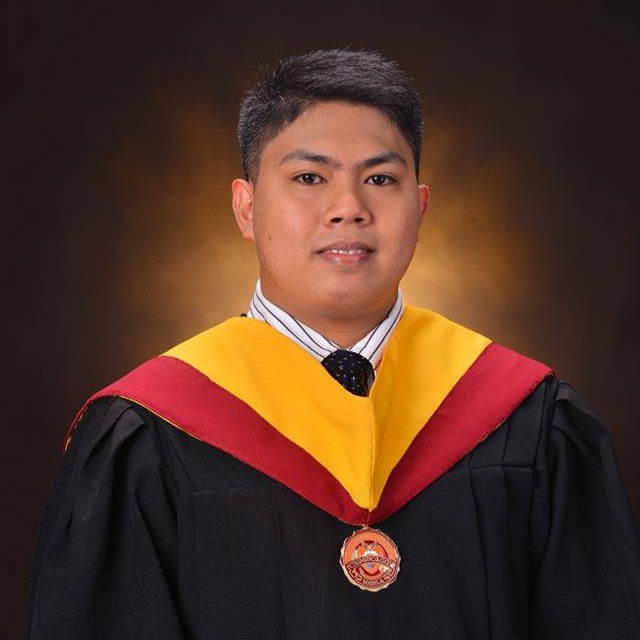
After graduation, Emerson’s long-kept secret was finally revealed—his father discovered the truth about his course and, feeling betrayed, cut off his support for good. Around the same time, his mother chose to settle permanently with his stepfather, leaving Emerson alone once more in Manila. With no one left to lean on, he made the choice to return to Paombong—but this time, not within the walls of his stepfather’s family. Instead, he rented a small apartment nearby, determined to stand on his own. A growing awareness weighed heavily on him: his path as a father was starting to mirror the very man he once swore he wouldn’t become. That realization sparked something in him. Determined to change, Emerson made a promise to do better. By a stroke of luck, a family friend offered him a chance to apply as a Patrol Crew. Despite his doubts—especially about his driving skills—he took the risk and was hired in November 2017, marking the beginning of a new chapter in his life.
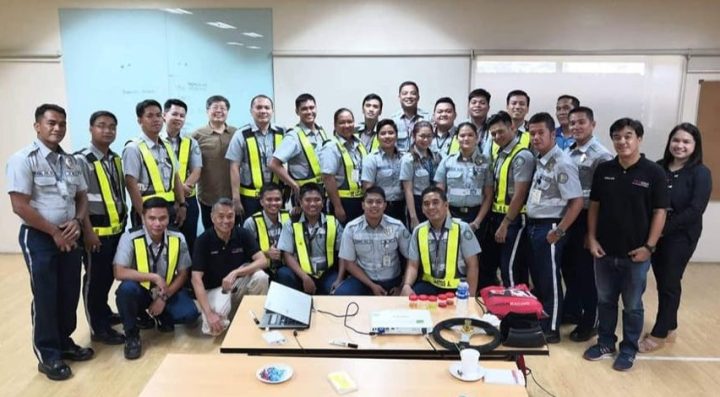
With a stable job at last, Emerson slowly began to rebuild the life he had long dreamed of. As Claire struggled to raise their seven-year-old son Lance, they agreed it was best for the child to stay with him—and Emerson embraced the role with open arms. He also took the initiative to bring his younger brother home from Gapan, along with his mother, who now had another son from her relationship with his stepfather. Piece by piece, he began to put their family back together. He even managed to continue the construction and furnishing of his own house—something that once felt impossible. Grateful for the opportunity and stability that NLEX Corporation had given him, Emerson made a promise to himself: to remain the provider his family needed, and to be the one that held them together—after so many years of being pulled apart.

Looking back, Emerson knows he could have easily chosen the path he was handed—the one shaped by absence, silence, and unfinished promises. And while the scars of his past will always be part of his story, they now serve as reminders—not of what was lost, but of how far he’s come. This is a story of breaking the cycle, building a future, and becoming a foundation of love—from a broken man to a pillar of hope.

Jovit D. Caballero, Tollways Development and Engineering. Jovit entered the company as a TAP trainee in 2014 and is currently assigned as a Contracts Engineer. He is a photography hobbyist who wants to explore his artistic and creative side. He is a foodie who is also a big fan of reality and game shows. As an adventurous guy, he is open to trying new things and ultimately achieves his goal to travel the world. G?
 NLEX Company Newsletter