

By Len Jorge

Imagine this, it’s a rainy morning, and you hear the sound of heavy rain pounding on your roof. The sky looks heavy, gray, and unforgiving. You check your phone, and there it is, a rainfall warning. But wait, it’s yellow. Sometimes it’s orange. Other times, red. You pause and wonder… what do these colors really mean? Should you just grab an umbrella and head to work? Should you start charging your devices? Or should you already be moving to higher ground?
In the Philippines, the color-coded rainfall warning system isn’t just a random choice of colors—it’s a life-saving tool.
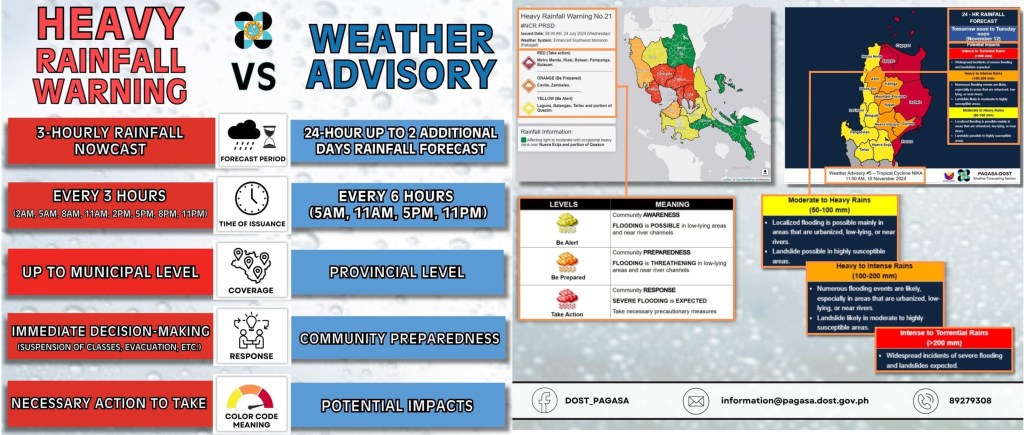
Each stage carries a different level of risk, and understanding the difference can literally save lives when floods and landslides threaten our communities. Let’s take a look at what these warnings mean and how you should respond when you see yellow, orange, or red on your screen.
So, what does “The Rainfall Warning System” really mean?
The Philippine Atmospheric, Geophysical, and Astronomical Services Administration — PAGASA developed the color-coded rainfall warning system in 2012, after massive flooding events like Typhoon Ondoy in 2009 and Habagat in 2012.
The goal was to make weather alerts more understandable for everyone. Instead of technical jargon about millimeters of rainfall, they chose colors, something visual and easy to grasp.
Yellow Warning
This means heavy rain has been observed or is expected. Flooding is possible in low-lying areas. It’s basically a heads-up. “Be aware”.
Orange Warning
This is more serious. Intense rain is happening or will happen. Flooding is threatening, and people in vulnerable areas should be prepared for evacuation. It’s the step where you don’t just watch—you start acting. “Be prepared”.
Red Warning
This is the highest alert. Torrential rain is happening. Widespread and severe flooding is expected. Evacuation is necessary. It’s not a suggestion, it’s a call to “take action now”.
Why do the colors matter? Why not just say “moderate rain” or “severe rain”? Because most of us don’t speak meteorology. Millimeters of rain don’t mean much to someone rushing to get their kids to school. But colors? Everyone understands those.
The warnings are based on how much rain has fallen in the past hour and how much more is expected:
| Yellow | 7.5–15 mm in an hour | 50-100 mm in 3 hours |
| Orange | 15–30 mm in an hour | 100-200 mm in 3 hours |
| Red | More than 30 mm in an hour | More than 200 mm in 3 hours |
That may sound small, but remember, Ondoy dumped more than 450mm in 24 hours. Whole cities turned into rivers. So even a few millimeters per hour can overwhelm drainage systems, especially in Metro Manila and other flood-prone areas.
The question is, what should you actually do when you see these color-coded warnings?
Yellow warning
Be aware. Check your surroundings. Make sure your emergency bag is packed. Charge your phone. Monitor updates. Don’t brush it off.
Orange warning
Be prepared. If you live in a flood-prone area, consider moving valuables upstairs. Inform family members. Prepare to evacuate. Don’t wait until the water is at your doorstep.
Red warning
Take action. Evacuate immediately to designated centers or safer ground. Don’t hesitate. The window to move may be short, and once waters rise, rescue becomes much harder.
Let’s clear up some myths on this color-coded rainfall warning system.
“Yellow means it’s safe.” Wrong. Yellow still means possible flooding. It’s your early chance to get ready.
“Red always means the rain is strongest where I live.” Not always. It means that somewhere in your province or city, rainfall is at dangerous levels. Even if it looks calm in your barangay, you could still be at risk.
“These warnings are exaggerated.” The truth? They’re conservative. They err on the side of caution because lives are at stake. Better safe than sorry.
Warnings only work if people respond to them. And that means we need a culture of preparedness. Schools, communities, companies, and families should practice what to do when these alerts come. Imagine if every household had a go-bag, an evacuation plan, and knew exactly what Yellow, Orange, and Red meant. The difference in disaster outcomes would be massive.

Now, let’s circle back to where we started. It’s a rainy morning. It’s pouring heavy outside. Your phone buzzes with a rainfall warning. Now you know yellow isn’t just a color, orange isn’t just in between, and red isn’t just a shade. They’re signals. Signals to be aware, be prepared, and take action.
The reality is, the rain may be out of our control, but our response isn’t. And in a country like the Philippines, where typhoons and monsoon rains are part of life, understanding these warnings isn’t optional, it’s survival.
And the next time you see Yellow, Orange, or Red, don’t just scroll past it. Listen, act, and maybe even save a life—yours, or someone you love.

Len C. Jorge, Compliance and Business Excellence. Len loves to travel, and she loves nature! She’s a taker of a good coffee and good conversation. Every travel she ventures, she makes sure it’s the best experience – every place is special. She loves going to places she has never been and meeting lovely people along the way. She always does what her heart beats for.
 NLEX Company Newsletter